Chronicle No. 36 · Innovations
The Milanese Barman Who Turned Coffee Into Cream
Espresso existed for half a century before Achille Gaggia's lever gave it the golden foam we now use to judge it.
The machine came first. The drink we recognise came half a century later.
- 1884 - Angelo Moriondo of Turin patents steam machinery for making coffee quickly, though in bulk rather than by the cup
- 1901 - Luigi Bezzera patents a commercial machine with groupheads and portafilters, the shapes still standing on every bar counter today
- 1903 - Desiderio Pavoni buys the patent, adds a pressure release valve and a steam wand, and shows the machine at the Milan fair of 1906
All of these forced hot water through coffee using steam pressure, at perhaps one and a half to two bars. That made coffee fast. It did not make espresso as we now understand it.
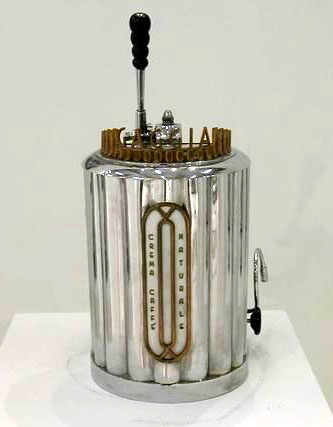
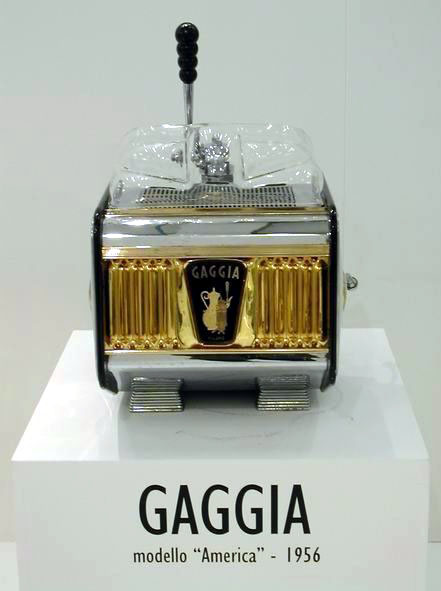
Achille Gaggia (1895-1961), a Milanese cafe man, filed a patent for a steamless coffee machine on 5 September 1938. After the war he developed the piece that mattered: a lever loaded a spring, the spring drove a piston through the filter, and the brewing pressure leapt to roughly eight to ten bars. He founded his company in 1947 and put the Tipo Classica into cafes in 1948.
Out of the spout came something nobody had ordered. A dense hazelnut-coloured foam sat on top of the cup. Gaggia named it and sold it: crema, a cream the coffee had produced for itself, offered as proof of quality rather than apologised for as a fault. Success arrived when the Motta and Biffi bar in Milan's Galleria Vittorio Emanuele II installed one of his machines.
Within a generation, crema was the thing baristas were trained to produce and guests were taught to look for. An accident of engineering had become the industry's standard of proof.
Lesson: Sometimes the innovation is not the machine but the nerve to sell the strange thing it produces.