Chronicle No. 27 · Incidents
The Imperial Hotel Opened on the Morning the Ground Moved
Tokyo, 1 September 1923: Frank Lloyd Wright's new hotel greeted its first guests hours before the Great Kanto earthquake.
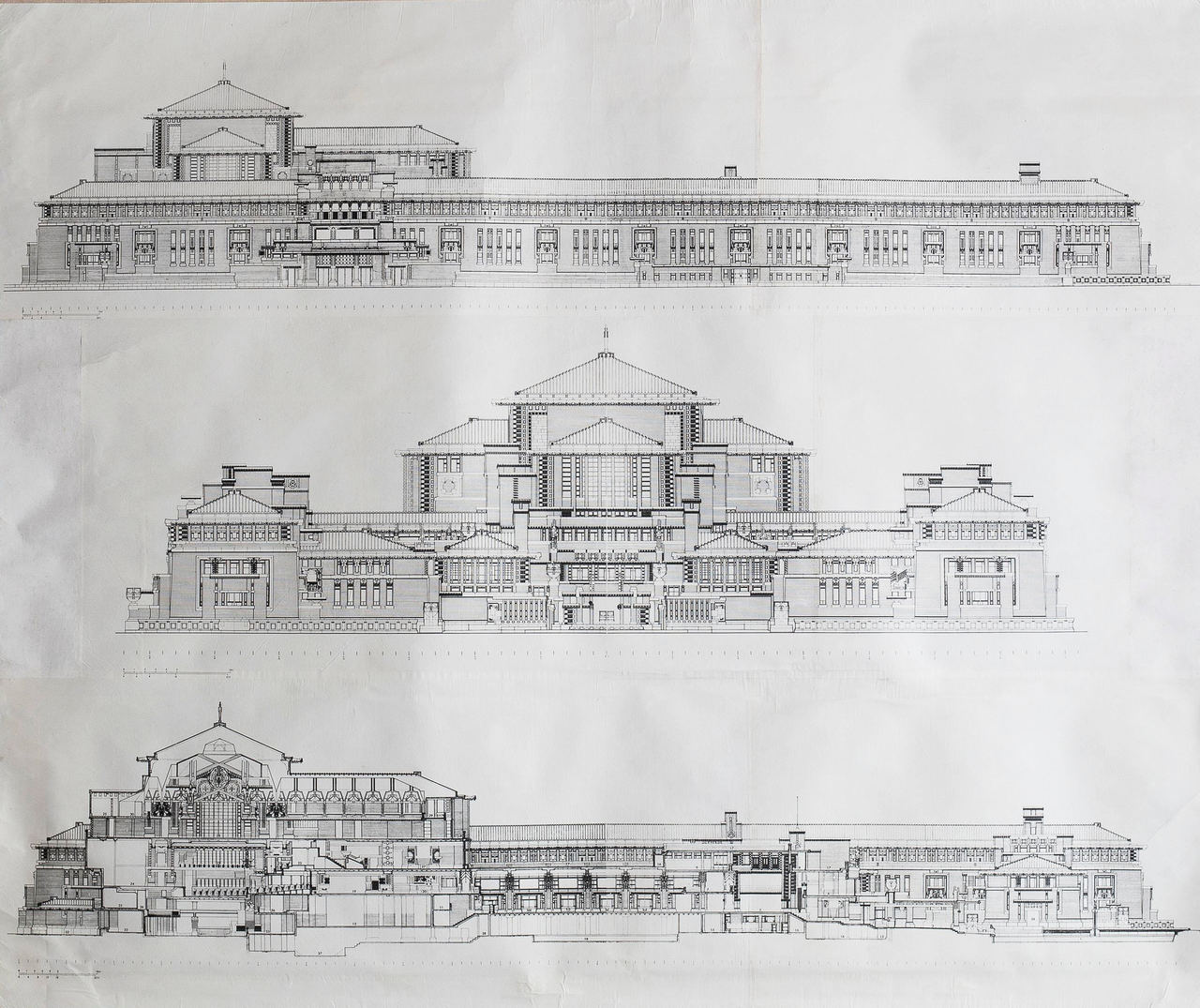
Frank Lloyd Wright's Imperial Hotel in Tokyo, years late and far over budget, opened on 1 September 1923. Around noon that day the Great Kanto earthquake struck. Tokyo and Yokohama were devastated, and the loss of life across the region was immense.
The hotel stood. The legend that it was untouched is not true and the hotel has never really claimed it: stonework fell, floors bulged, the centre of the building settled. But it held, and it kept working.
What followed is the part that belongs to hospitality rather than to architecture. With much of central Tokyo unusable, the Imperial became infrastructure:
- Guest rooms were let as offices to burned-out companies, newspapers and news agencies
- The United States embassy, destroyed in the fire, operated from the hotel
- The theatre was lent to Tokyo playhouses that had lost their own
- Homeless people were taken in and fed
A telegram reached Wright in Los Angeles days later, sent in the name of Baron Okura, the hotel's financier, reporting that the hotel stood undamaged and that hundreds of homeless had been provided for by perfectly maintained service. Wright's biographer Brendan Gill suspected Wright had a hand in composing it, so read the wording with care. The service, though, is documented.
The Wright building served for 44 years, until 1968.
Any hotel can be gracious on a good evening. The Imperial's staff spent their first day in business running a relief centre, and the phrase worth keeping from that telegram is not the flattery about genius. It is perfectly maintained service, on the worst day imaginable.
Lesson: In a disaster a hotel's real product is not luxury but shelter, order and a working switchboard.