Chronicle No. 60 · Places
The Hotel That Stood: Tokyo's Imperial and the Earthquake of 1923
Frank Lloyd Wright's Imperial Hotel opened on the morning the ground gave way — and the legend outgrew the truth.
The Imperial Hotel had been Tokyo's window on the West for a generation — the first house opened in November 1890, designed by Yuzuru Watanabe — when its owners asked an American to build them a new one.
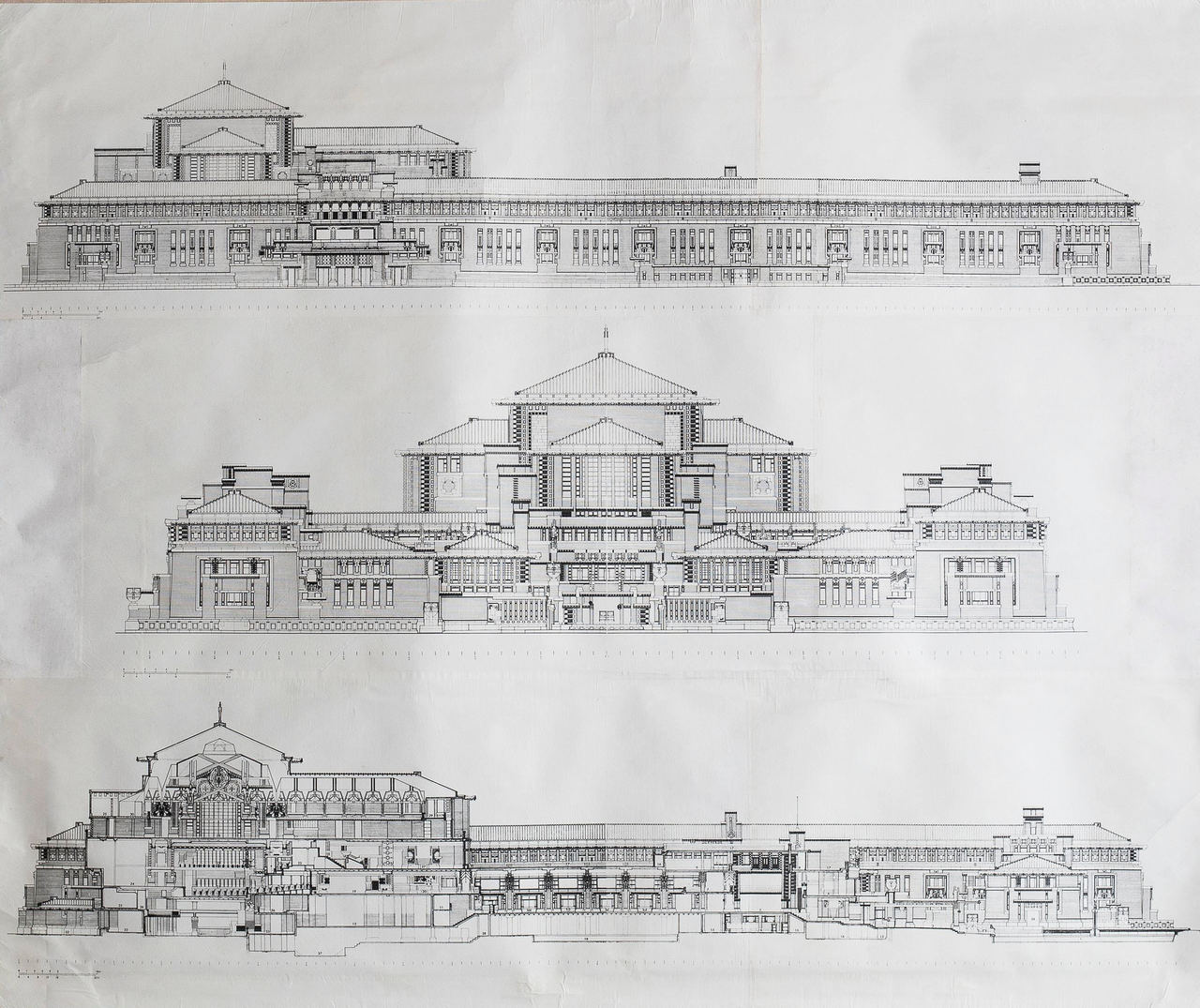
Frank Lloyd Wright gave them a low, dark, interlocking mass of lava stone and brick, floated on soft ground. It opened officially on 1 September 1923.
That was the morning of the Great Kantō earthquake, magnitude 7.9. Tokyo burned. The Imperial did not.
The truth is more interesting than the legend:
- The building survived, but it was not untouched — the central section slumped, floors bulged, four pieces of stonework fell and fans dropped from balconies.
- Electric ranges toppled in the kitchen and started a fire. Staff put it out.
- The hotel then took in homeless people from the city.
Baron Okura cabled Wright: Hotel stands undamaged as a monument of your genius hundreds of homeless provided by perfectly maintained service congratulations. Wright circulated the telegram to journalists, and the myth of a flawless building was born.
Read that cable again. Half of it is about architecture. The other half — perfectly maintained service — is about people who kept working while the city fell down around them.
Wright's Imperial was demolished in 1967–68. Its central lobby wing and reflecting pool were dismantled and rebuilt at the Museum Meiji-mura near Nagoya, where you can still walk into them.
The stone was saved. The half of the cable worth saving is the other one.
“Hotel stands undamaged as a monument of your genius hundreds of homeless provided by perfectly maintained service congratulations”
Lesson: In a disaster, guests remember the people who stayed at their posts far longer than they remember the building that held.