Chronicle No. 17 · History
Lodging Without Money: 30,000 Kilometres of Andean Hospitality
No coins, no wheels, no alphabet. Yet a traveller on the Inca road could count on shelter and a meal every day's walk.
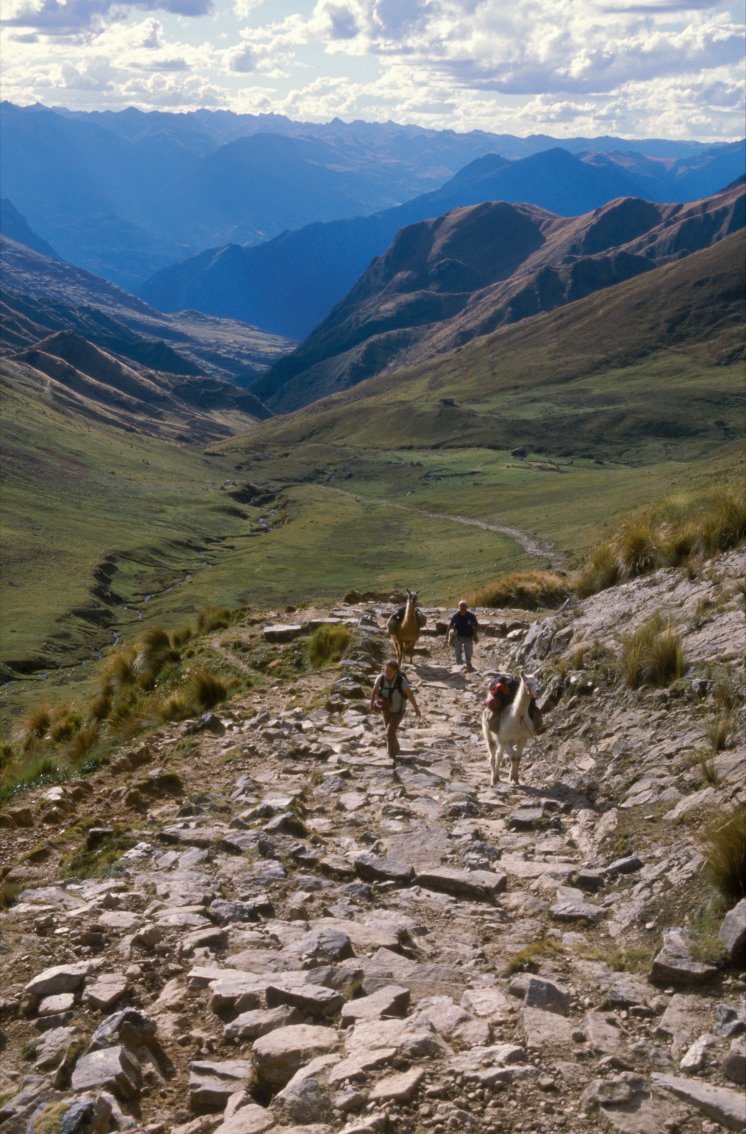
The Qhapaq Ñan, the Andean road system inscribed by UNESCO in 2014, ran roughly 30,000 kilometres through what are now six countries: Colombia, Ecuador, Peru, Bolivia, Chile and Argentina. The Spanish chronicler Pedro de Cieza de León, seeing it in the 1540s, wrote that in the memory of people he doubted there was record of another highway comparable to it.
The roads are the famous part. The hospitality built into them is the more remarkable achievement.
Every 20 to 30 kilometres — about a day's walk — stood a tambo: a way station of stone and earth offering shelter, water and food. Beside many of them were colcas, storehouses holding provisions, cloth and supplies drawn from the state's granaries. Between the tambos sat smaller huts, chaskiwasi, for the chaskis, the relay runners who carried messages and khipu knot-records across the empire at speed.
What makes this extraordinary is what the Inca did not have. No wheeled vehicles. No draught animals beyond the llama. No writing as Europeans understood it. And no money at all.
The tambos were staffed instead through mit'a, a rotating labour obligation. Communities near the road took turns maintaining and provisioning the station serving their stretch. Nobody paid for a bed and nobody was tipped. The state fed the traveller; the community owed the state its labour; the arrangement held because everyone's turn came round.
It is the oldest lesson in the business, delivered at altitude. A network is only as good as its least reliable stop. What the Inca built was not a great inn but a guaranteed one, over and over, for a month of walking.
“In the memory of people I doubt there is record of another highway comparable to this”
Lesson: Consistency at every stop is worth more to a traveller than brilliance at one of them.