Chronicle No. 62 · Places
Falaknuma: The Palace Built by a Prime Minister and Kept by a Nizam
A scorpion-shaped palace above Hyderabad, a dining table for 101, and a guest who never quite went home.
Sir Viqar-ul-Umra, Prime Minister of Hyderabad State, laid the foundation stone of his new house on 3 March 1884. It took nine years to finish. William Ward Marrett designed it, blending Italian and Tudor manners, and set it on a hill above the city.
Seen from the air, the plan is a scorpion, two stings spread out as wings to the north. Falaknuma means mirror of the sky.
Then came the hospitality problem no host wants.
In the spring of 1897 the sixth Nizam came to stay. He extended his visit. Then he extended it again, indefinitely. Eventually Sir Viqar did the only thing a subject could do and offered the palace to his ruler. The Nizam accepted, and paid some of its value.
What the Nizams then kept up was extraordinary:
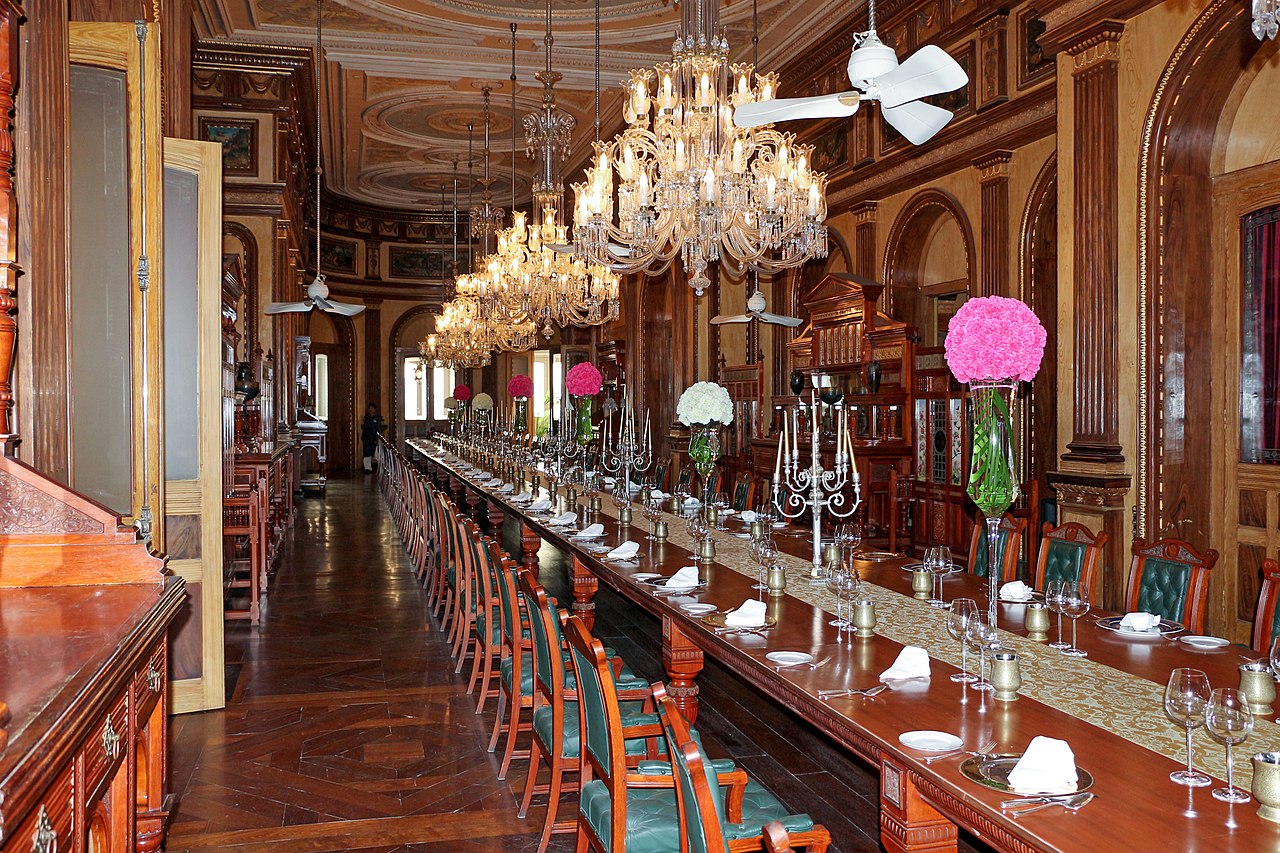
- A dining hall seating 101 guests at a single table, on carved rosewood chairs upholstered in green leather.
- A guest list that included King George V and Queen Mary.
After that, decades of damp, dust and decline.
Restoration began in 2000, led by Princess Esra with Taj Hotels. It was slow, unglamorous work — cataloguing, cleaning, rewiring, rebuilding — and it ran for a full decade before the hotel opened in November 2010.
The romance of a palace hotel is in the chandeliers. The actual business of one is in the ten years nobody photographed.
Lesson: Heritage properties are inherited as liabilities before they become assets; patience, measured in decades, is a legitimate strategy.