Chronicle No. 73 · Innovations
Delmonico's: The Menu That Let You Choose
Before 1830, eating out in America meant one meal at one hour at a long table. Two Swiss brothers printed a card of several hundred dishes with the prices beside them.
In 1827 two Swiss brothers, Giovanni and Pietro Delmonico, opened a café and pastry shop at 23 William Street in New York. Within a few years it had become a restaurant, and it brought Americans something Paris already had: a menu you ordered from.
Until then the American eating house ran on table d'hôte — one meal, served at one hour, at a long shared table, for one price. You ate what the house had cooked.
Delmonico's printed a card listing several hundred dishes with a price against each, and let a guest assemble a dinner. It added private tables, a wine list, and cloth on the tables. The transaction changed shape: the guest was no longer being fed, they were buying.
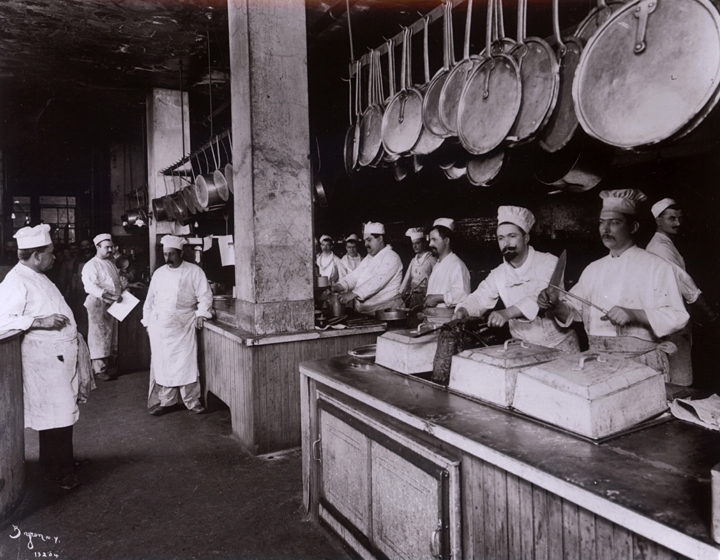
Under chef Charles Ranhofer, who arrived in 1862, the kitchen produced dishes that are still on menus:
- Lobster Newberg
- Baked Alaska, created in 1867 to mark the purchase of Alaska
- The Delmonico steak
Ranhofer wrote the whole system down in The Epicurean (1894) — some 1,200 pages and around 3,500 recipes, the first serious codification of professional cooking published in America.
Prohibition took away the wine list, and with it the margin. The last Delmonico's of the original family closed in 1923.
Lesson: Delmonico’s did not invent good food in America. It invented choice — and choice is what turned eating out from a necessity into a decision worth paying for.